Prof James Harrison participates in inaugural ITLOS Workshop for Legal Advisers
Fri 30 September 2022
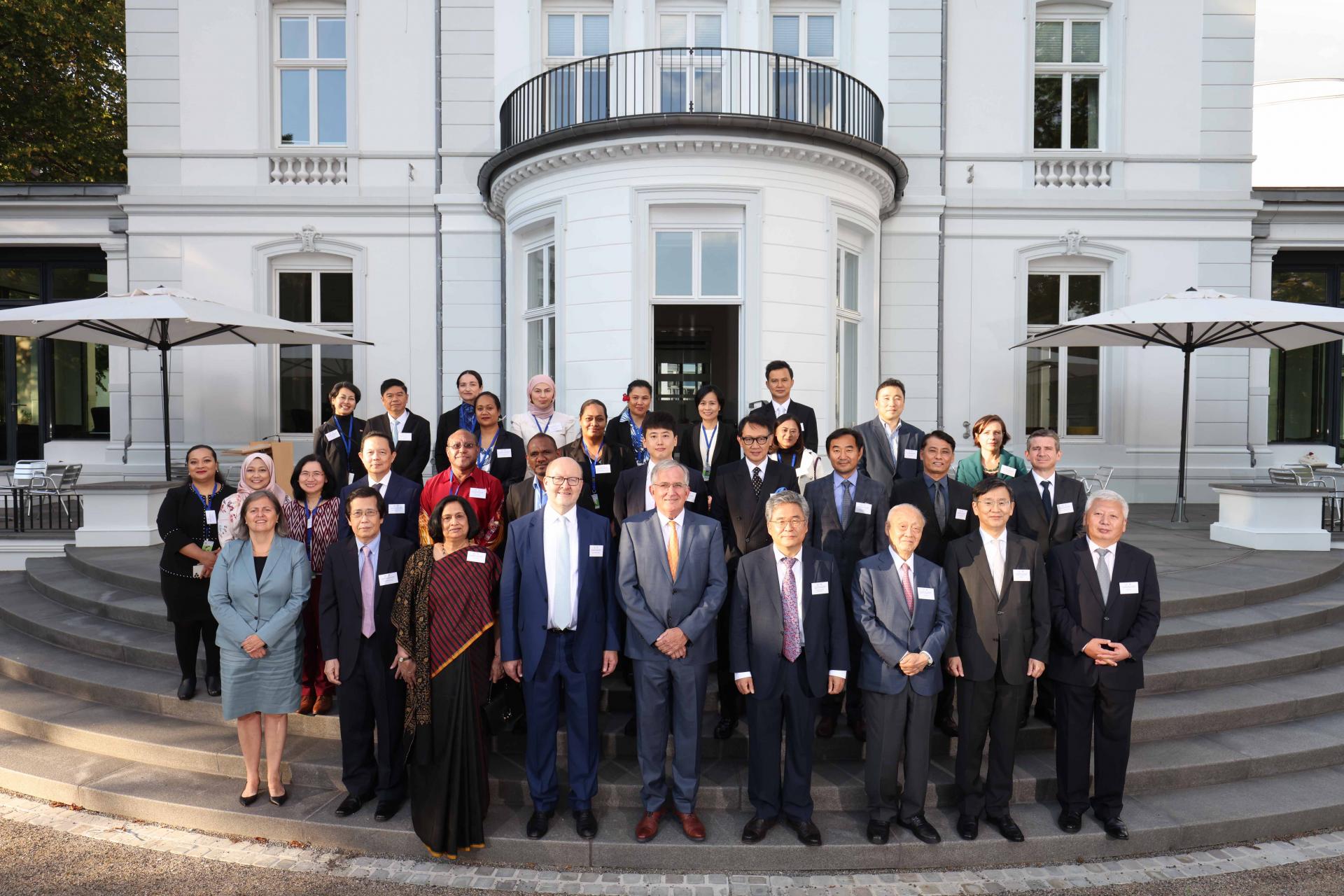
The inaugural Legal Advisers Workshop took place between 11 – 16 September at the seat of the International Tribunal for the Law of the Sea (ITLOS) in Hamburg and was designed for legal advisers from South-East Asia and Pacific Small Island Developing States. The event formed part of a series of workshops that are part of the Tribunal’s capacity-building programmes aimed at promoting and disseminating knowledge about the United Nations Convention on the Law of the Seas and the dispute settlement procedures enshrined in its Part XV.
In his opening statement, the President of the Tribunal emphasised that “…[w]hile the Tribunal’s core function is to adjudicate disputes relating to the law of the sea, it is also strongly committed to capacity-building programmes with a view to the training of future generations of law of the sea experts, including government officials, students and researchers.”
The workshop programme consisted of sessions dedicated to procedural and substantive issues, including the role of the Tribunal in settling law of the sea disputes, an overview of proceedings before the Tribunal, as well as substantive matters relating to the law of the sea. Presentations were delivered by ITLOS judges and invited legal experts.
Professor James Harrison, Professor of Environmental Law at Edinburgh Law School, delivered a presentation to the workshop on international fisheries law, with a focus on the legal rules relating to sustainable fisheries. This is a significant issue for many states around the world and particularly in South-East Asia and the Pacific, where local populations rely on fishing as a source of food and employment.
The presentation emphasised how international law can promote the objective of preventing overfishing and other impacts of fishing on the marine environment, whilst also highlighting how the interpretation and application of the law needs to take into account the special requirements of developing countries. Emerging challenges to effective fisheries conservation and management, such as climate change, ocean acidification and spatial pressures, were also addressed in the presentation and the ensuing discussion.
Image credit: ITLOS