Edinburgh Law School brings together leading voices for BBNJ Workshop
Mon 9 November 2026
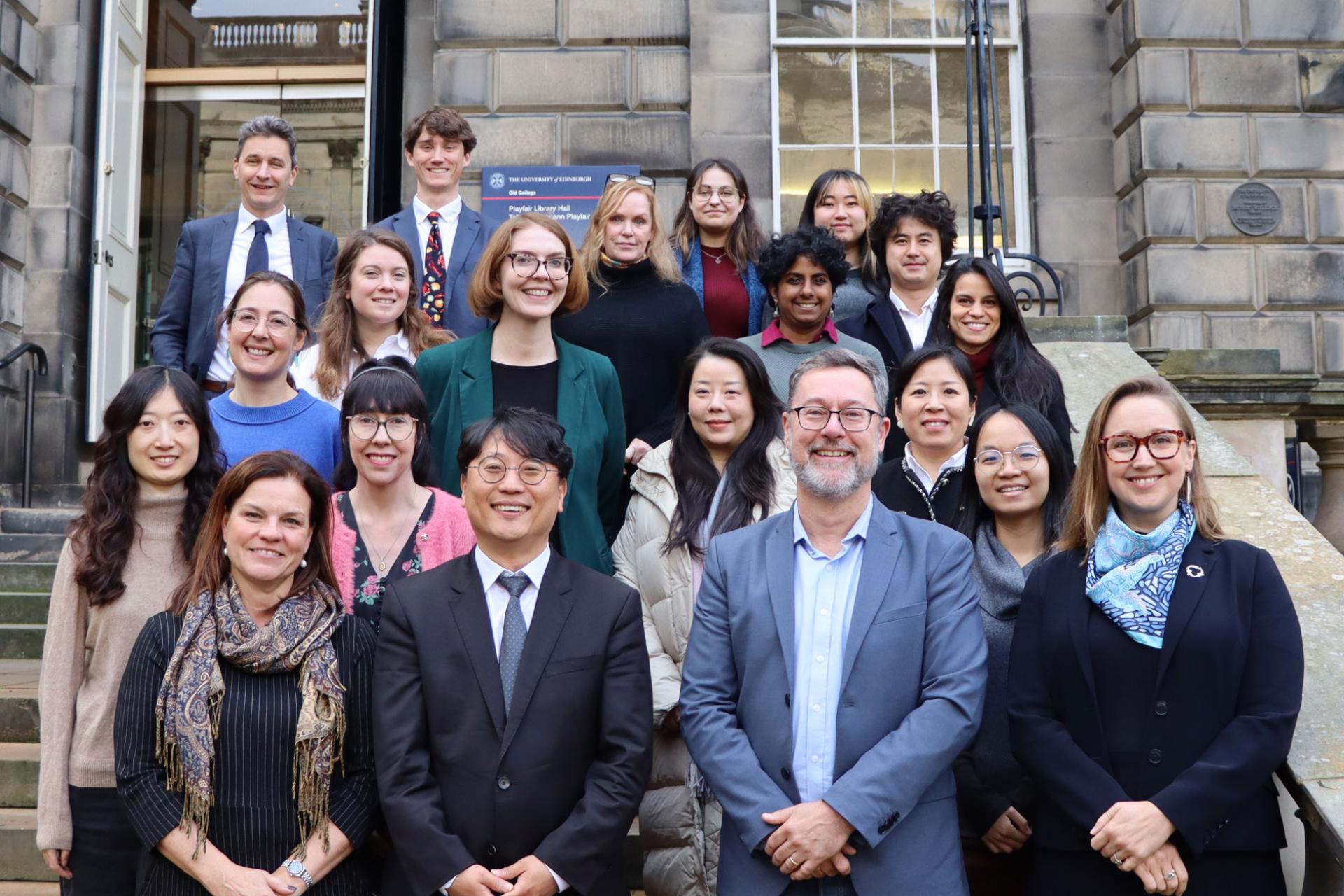
Edinburgh Law School hosted an international workshop on Implementation and Compliance under the BBNJ Agreement from 26 to 29 October 2026. The event brought together researchers, practitioners and policy experts to examine one of the most pressing questions in international ocean governance: how to make sure a landmark treaty delivers on its promise.
The event was co-organised with Ocean Voices, the Centre for International Law at the University of Singapore, the Korea Institute of Ocean Science and Technology, the Norwegian Centre for the Law of the Sea at the University of Tromsø, and the Australian National Centre for Ocean Resources and Security at the University of Wollongong.
A treaty entering a critical phase
The full title of the BBNJ Agreement is the Agreement under the United Nations Convention on the Law of the Sea on the Conservation and Sustainable Use of Marine Biological Diversity of Areas beyond National Jurisdiction. Adopted in 2023, it is the first comprehensive, cross-sectoral ocean treaty in decades. It governs the high seas and deep seabed, which cover nearly two-thirds of the global ocean.
The Agreement entered into force in January 2026. States are now preparing for the first Conference of the Parties in January 2027, which will make key decisions about how the treaty works in practice.
James Harrison, Professor of Environmental Law at Edinburgh Law School and the lead organiser of the workshop, explained that, “whilst the conclusion and early entry into force of the BBNJ Agreement has been rightly celebrated as a major victory for multilateralism, there remains much to be done before positive effects on marine ecosystems will be seen in practice. At this critical juncture for the treaty, the objective of this workshop was to bring together leading experts on the BBNJ Agreement to explore the opportunities and challenges relating to implementation of the BBNJ Agreement.”
From principles to practice
The workshop built on a previous event hosted by the University of Wollongong in 2024. Participants in the Edinburgh workshop examined:
- the legal, administrative and policy measures needed to implement the Agreement effectively;
- the practical steps States need to take at national and international level to promote the objectives of the Agreement;
- the role and function of the Agreement’s Implementation and Compliance Committee and its relationship with the dispute settlement system under the Agreement; and
- how to engage non-parties so the treaty can meet its overall objectives.
Showcasing research
Amongst the speakers at the workshop were a number of academic staff and PhD students from Edinburgh Law School. According to Professor Harrison, “Edinburgh Law School can boast considerable expertise in international ocean governance and the workshop was a chance to showcase some of our leading research on the practical implementation of the BBNJ Agreement, from the development of standards and guidance on environmental impact assessment and strategic environmental assessment, to understanding the principles and processes needed for the design of an equitable and effective network of marine protected areas in areas beyond national jurisdiction. The research being done at Edinburgh Law School, alongside that of the other presenters at the workshop, can help to identify key opportunities for the parties to the Agreement to make strides towards achieving a more healthy and biodiverse ocean.”
Other Edinburgh Law School academics addressed wider perspectives on the BBNJ Agreement, including work by Dr Rozemarijn Roland Holst on how a robust theoretical understanding of the global commons can support effective implementation of the Agreement, and research by Dr Amandine Léonard on how the BBNJ Agreement will interact with international intellectual property law.
The Ocean Voices team, based at the University of Edinburgh, also shared their work, with Programme Director Dr Harriet Harden-Davies exploring the relationship between implementation, compliance, capacity building and transfer of marine technology. Lucy Tomkins, an Ocean Voices Programme Officer and a PhD student at Edinburgh Law School, presented her research on rights-based approaches and the opportunities to bring human rights into the heart of the BBNJ Agreement.